Projects
Charleville Castle Floor Restoration
Stone Floor Restoration at Charleville Castle
How we uncovered and restored the original red and cream stone floor at Charleville Castle, Tullamore, after years hidden under vinyl.
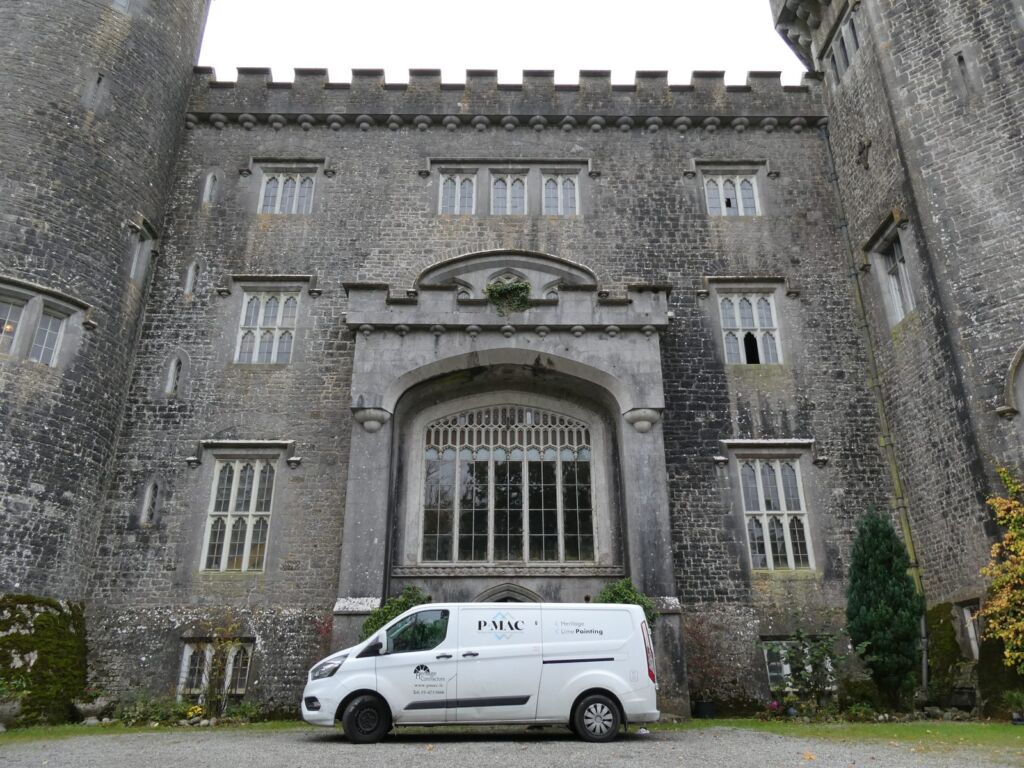
Charleville Castle outside Tullamore, Co. Offaly is one of Ireland's finest Neo-Gothic castles. It dates back to 1798, and inside it is still full of carved Gothic panelling, leaded windows and grand rooms. In autumn 2026 our team was brought in to look at one of its floors. It was covered in black and white vinyl tiles. What was underneath was far better.
The flagstone floor hiding under the vinyl
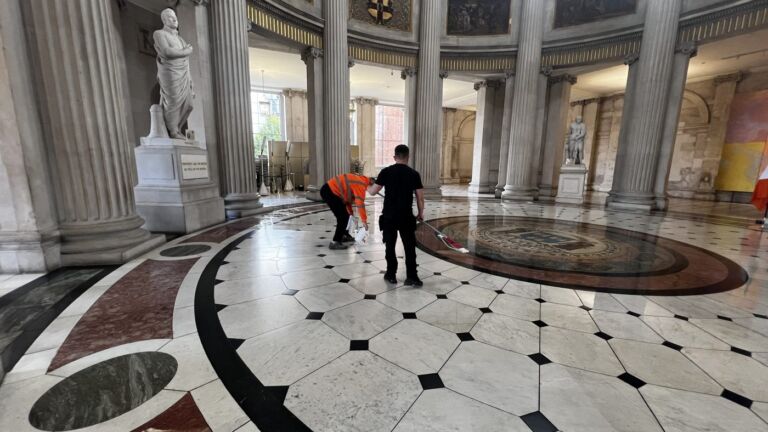
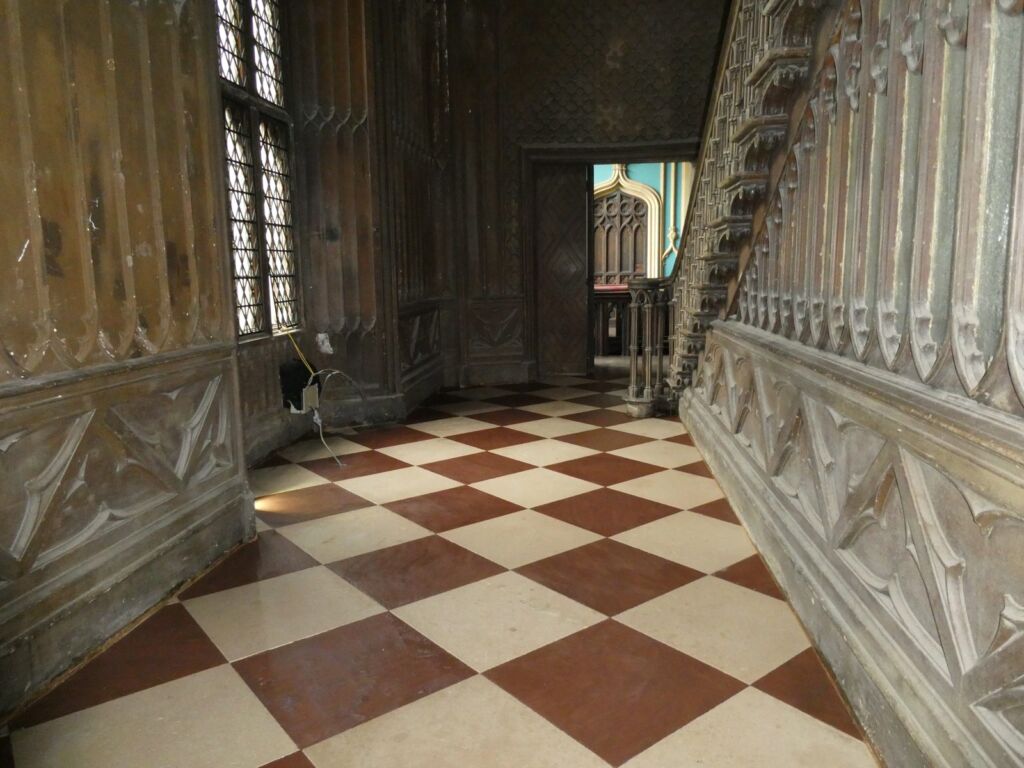
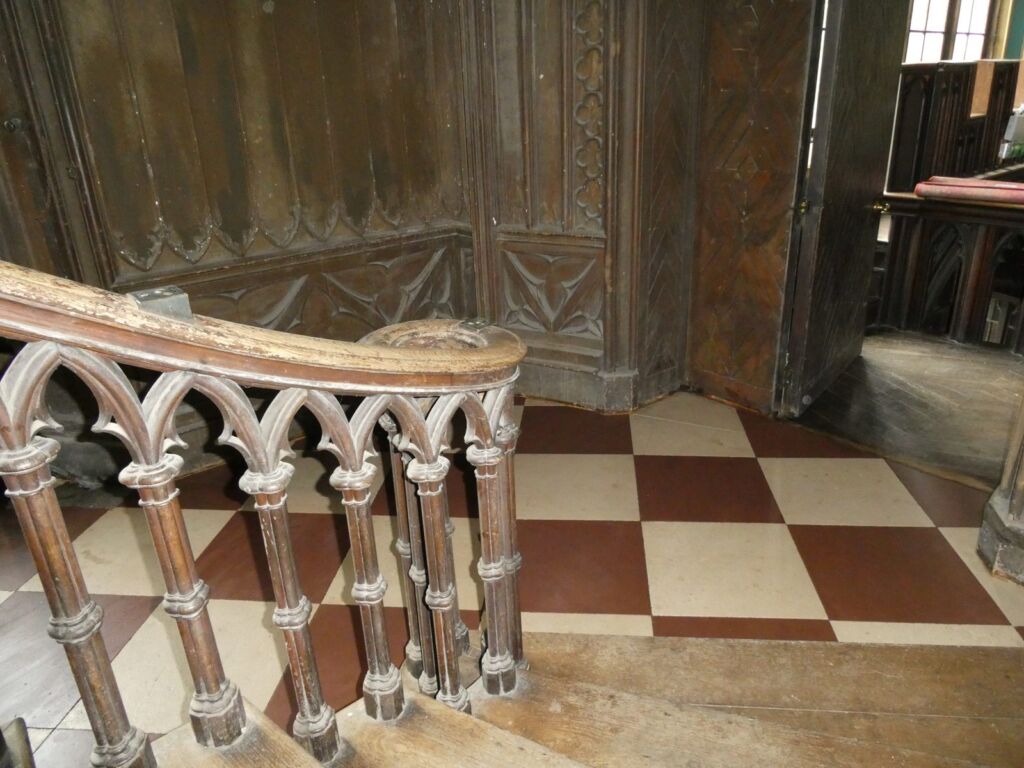
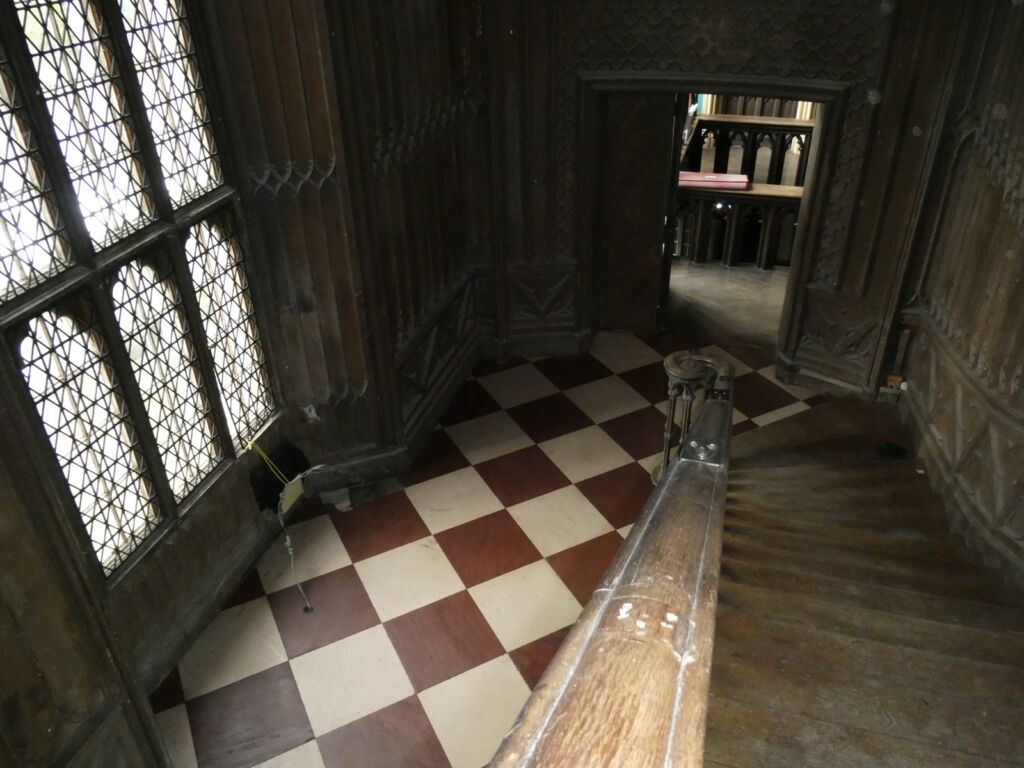
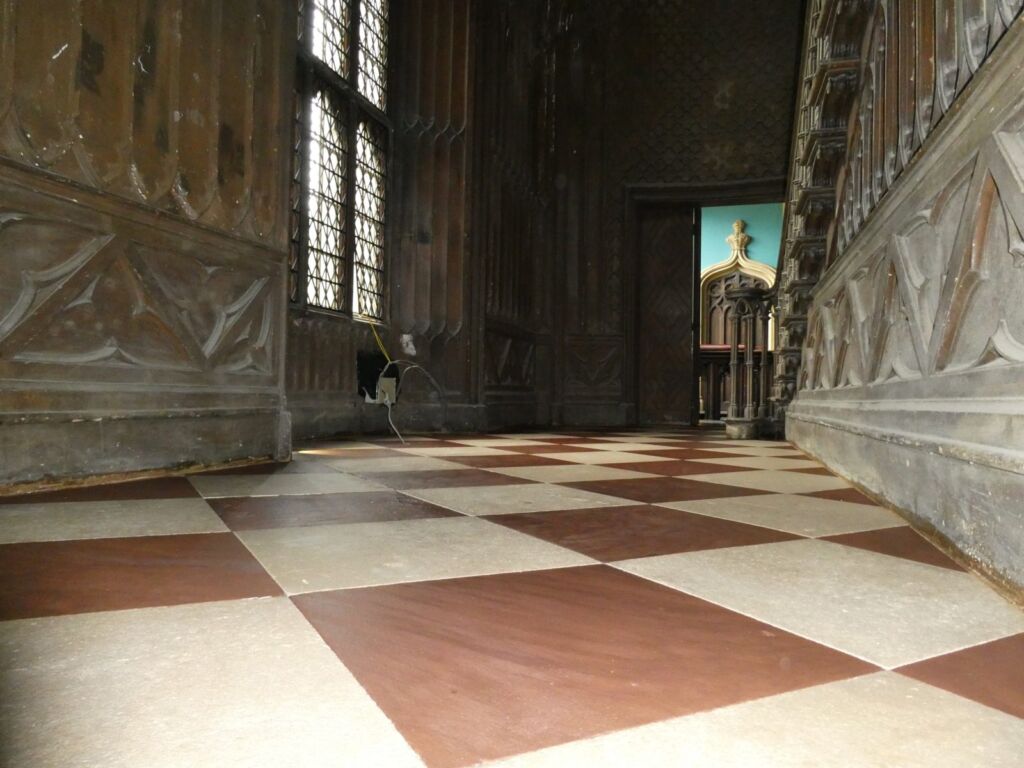
At some point the original floor had been covered over. The vinyl was laid as a black and white chequerboard straight on top of it. When one tile was lifted, the real floor showed through: large natural stone flags in red and cream, laid on the diagonal in a chequerboard of their own. A flagstone floor like this is exactly the kind of original feature worth saving.

How we restored the stone floor
We stripped the vinyl off by hand. On a floor like this there is no place for heavy machinery. Each tile was lifted carefully and the adhesive was scraped back by hand, so the stone underneath was not scratched or chipped along the way.
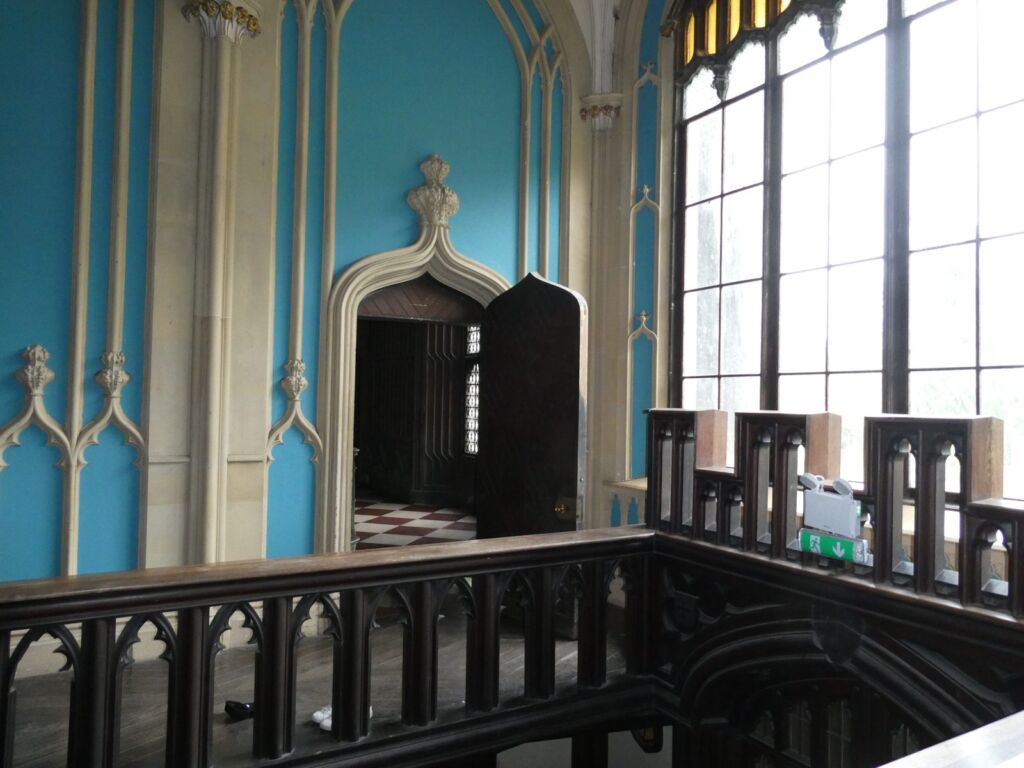
With the vinyl and adhesive gone, we sealed the stone. The seal protects the surface from everyday wear and brings the colour and contrast back on show. The red and cream squares now run the length of the hall again, lit by the leaded window and framed by the carved panelling on both sides.
Why original stone floors are worth uncovering
- It can't be replaced like for like. Stone that has been walked on for generations has a wear and a colour that new stone will never match.
- It belongs to the building. In a period house or a protected structure, the original floor is part of the design, just like the windows, joinery and plasterwork.
- Covered is not the same as lost. A floor that has been hidden for years can often be brought back with careful work.
How heritage floor restoration differs from a standard floor job
On a new floor the aim is usually a perfect, even finish. On a floor that has been in place for generations, the job is to bring the surface back while respecting its age and character. That means doing as little as needed, working by hand around carved panelling and doorways, protecting the original material rather than grinding it back to look new, and keeping the wear that tells the story of the floor.
Stone floor restoration: common questions
Can an old flagstone floor be restored?
Usually, yes. Stone is hard wearing, and a floor that has been covered for years is often in better shape than people expect. The first step is to lift a small piece of the covering and see what is underneath.
Is it worth restoring a stone floor instead of replacing it?
In most period homes and older buildings, yes. New stone will not match the colour and wear of the original, and the original floor is part of the character of the building.
Do stone floors need sealing?
Most do. A sealer protects natural stone from staining and everyday wear. The right sealer depends on the stone and how the room is used.
Do you restore stone floors in homes as well as heritage buildings?
Yes. We restore stone floors in homes, businesses and heritage buildings across Dublin and Ireland. PMAC is on the Register of Heritage Contractors, and our heritage team also carries out lime pointing and stone replacement. See our stone floor restoration service, or send us a few photos of your floor through our contact page.
- Service
- Floor Restoration
- Location
- Tullamore, Co. Offaly
- Photos
- 7
Related projects